
Filipino women are petite, warm and family-centred: they average about 150 cm in height, and brides in registered marriages are typically 28 years old. Most Filipinas have dark brown eyes, straight black or dark brown hair and skin from light tan to deep brown. They are often better educated than men – more women than men finish college – and most speak English fluently. Below are the key figures, a closer look at faces and features, six personality traits, communication habits and what to expect as a partner.
Filipino Women at a Glance – Key Facts
The figures below come from the Philippine Statistics Authority and international studies, and they show a country where women lead in education but not yet in paid work.
| Average female height | 149.6 cm (4 ft 11 in) – NCD-RisC (Imperial College London), 2016 study |
|---|---|
| Median age of brides | 28 years (grooms – 30) – Philippine Statistics Authority, registered marriages 2022 |
| College graduates, population aged 6+ | 14.5% of females vs 10.5% of males – Philippine Statistics Authority, 2021 |
| Share of university students who are female | About 58% – Philippine Statistics Authority, tertiary enrolment 2023 |
| Labour force participation | 49.9% of females vs 72.3% of males – World Bank, 2024 |
| English proficiency | 569 points, “High proficiency”, 28th in the world – EF English Proficiency Index 2025 |
Filipino Women's Facial Features
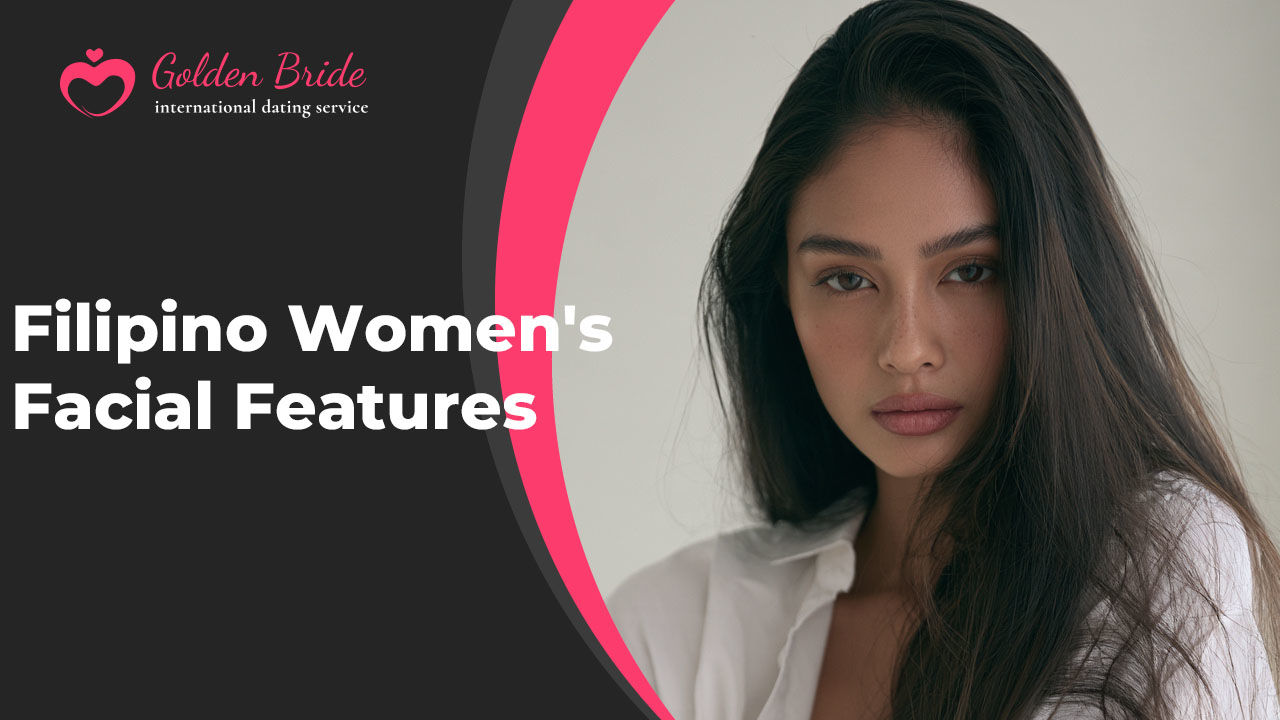
The face of a typical Filipina woman is a Southeast Asian one: soft, rounded lines, dark eyes and warm skin tones. Across more than 7,000 islands, though, features vary a lot, so any description is an average rather than a rule.
Face Shape and Skin
Most Filipinas have a round or soft oval face with full cheeks, moderately high cheekbones and a gently tapered chin. The nose tends to be small to medium with a lower, wider bridge, and the lips are naturally full. The complexion ranges from light tan to deep brown, with warm golden or olive undertones, and it tans easily in the tropical sun.
- Face: round or soft oval, full cheeks
- Nose: small to medium, lower bridge
- Lips: full, with a defined cupid's bow
- Skin: light tan to deep brown, warm undertones
This variety has deep roots. In terms of ethnicity, the population is mainly of Austronesian descent, with Chinese, Spanish and other ancestry mixed in over centuries, so a woman from Ilocos may look quite different from one from Mindanao or Manila.
Hair
Natural hair is almost always black or very dark brown, thick and straight, with some women having soft waves. It is usually worn long – waist-length hair is common and admired – and kept glossy with coconut oil or conditioners suited to humid weather. Lighter brown or highlighted shades are popular in cities, but they come from a salon rather than nature.
Eyes
Dark brown eyes are almost universal, often so dark they look black; lighter brown or hazel eyes are uncommon and usually linked to mixed ancestry. Eyes are typically almond-shaped and medium to large. Many have a visible double eyelid, while others have a single or partly hooded lid – both are common. Long, dark lashes and thick eyebrows complete the look.
Physical Characteristics of a Typical Filipino Woman
The Philippines has some of the shortest average heights in the world, and that shapes how local women dress and how they see themselves. Body types, though, are far from uniform.
Height and Build
Average female height is 149.6 cm (4 ft 11 in), according to the NCD-RisC study led by Imperial College London – among the lowest averages of the 200 countries measured. Builds are generally small-framed and petite, with narrow shoulders and small hands and feet, but there is plenty of range, from very slight to curvy and athletic. Height and weight are shaped heavily by nutrition and income, not only by genetics.
Everyday Style
In hot, humid cities, everyday clothing is light and practical: jeans or shorts, T-shirts and blouses, sandals or sneakers, with a cardigan for air-conditioned malls and offices. Women wear neat, modest clothes for church, school and work, and take care with hair and nails even on ordinary days. The traditional dress – the Filipiniana with its butterfly sleeves, or the baro't saya – is worn mainly at weddings, formal events and national celebrations.
Personality Traits
No trait fits a whole nation of more than 110 million people, but several values run deep in Filipino culture and shape how most women behave in a relationship.
Family-Oriented
Family comes first, and it is usually a big one: parents, siblings, cousins and grandparents stay closely involved in each other's lives. Many adult children support parents and other loved ones financially, and decisions such as moving abroad or getting engaged are discussed with the family. Relatives may ask questions that feel nosy – about your job or wedding plans – but it is a sign of interest, not rudeness. In practice, being with her means getting to know her relatives early and accepting that quality time often means Sunday lunch with twenty people.
Warmth and Hospitality
Filipinas are known for making people feel welcome. Guests are fed first, strangers are greeted with a smile, and friends are made quickly. This warmth is not a performance for visitors – it is how people treat each other at home. Expect her to check that you have eaten, introduce you to everyone and remember small details about your life.
Resilience
Typhoons, floods and economic ups and downs are part of life there, and people meet them with a mix of patience and humour. Many women have worked abroad or supported a family from a young age. With a partner, this shows up as a calm, practical approach to problems and a refusal to give up when things get hard.
Education and Ambition
Women in the Philippines are more likely than men to finish college: 14.5% of females aged 6 and over are college graduates, against 10.5% of males, and about 58% of university students are female. Many work in teaching, nursing, business and healthcare, at home and abroad. Expect a partner who takes her career seriously and values a man who respects it.
Faith
The vast majority of Filipinos – around eight in ten – are Roman Catholic, and faith is part of daily life for many women – Sunday Mass, prayers before meals, religious holidays celebrated with the whole family. Not every Filipina is devout, but most respect these traditions and appreciate a partner who does too.
Loyalty
Once committed, they tend to be devoted and loyal partners who invest in the long term. Loyalty extends to friends and family as well: people stand by each other in hard times. In return, she will expect the same consistency – honesty, keeping promises and treating her family with respect.
Language and Communication
Language is rarely a barrier, but the communication style is more indirect than many Westerners expect.
Languages
Filipino (based on Tagalog) and English are both official languages, and English is used in schools, government and business. The country scored 569 points on the EF English Proficiency Index 2025, ranking 28th in the world and second in Southeast Asia after Malaysia. Most people you meet will speak fluent English, often mixed with Tagalog in everyday “Taglish”.
Communication Style
Filipinos value harmony and avoid open confrontation. A direct “no” can feel rude, so disagreement is often softened into “maybe” or “we'll see”. Feedback is rarely phrased negatively; even criticism tends to be framed positively. Respect for elders matters: younger people add po and opo to sound polite. Listening for what is meant, not just what is said, is the most useful skill for a foreign partner.
Non-Verbal and Digital Communication
People often point with their lips, raise their eyebrows to say “yes” and greet elders with mano – pressing the back of the elder's hand to the forehead. Smiling is constant and can hide embarrassment as well as joy. Online, Filipinos are some of the most active social media users in the world: expect frequent messages, Facebook Messenger and video calls, and plenty of emojis and photos.
Beauty Standards in the Philippines
Filipinas are widely considered beautiful, and the country takes beauty seriously: it has won Miss Universe four times and beauty pageants are followed like sports. Long, glossy hair, clear skin, a bright smile and a neat, put-together look are what most people find attractive. Everyday makeup tends to be light – tinted lip, a little blush, groomed brows – with bolder looks saved for events.
Fairer skin has long been promoted by advertising, and whitening products are still common, but attitudes are shifting: more women now embrace morena (tan or brown) skin as beautiful in its own right. Skincare, sunscreen and hair care matter more than heavy makeup, and fitness through walking, dancing, Zumba or volleyball is popular among younger women.
Common Stereotypes – and the Reality
Plenty of clichés circulate online. Here is what the reality looks like.
Stereotype 1 – They Are All Submissive
Politeness and a dislike of conflict are often mistaken for submissiveness. In fact, many Filipino households are run by the mother, who manages the money and makes key decisions. Women are more likely than men to hold a college degree, and the country has had two female presidents.
Stereotype 2 – They Only Want a Foreign Husband for Money
Financial security matters, as it does everywhere, and many women support their families. But most women there wed local men, and those who choose a husband from abroad look first for respect, kindness and commitment in a relationship. Treating the whole group as gold diggers ignores how hard most of them work.
Stereotype 3 – They All Look the Same
With Austronesian, Chinese, Spanish and other roots spread across thousands of islands, appearance varies widely – from very petite to tall, from light to deep brown skin. Regional and family background shape looks far more than any single “Filipina type”.
Stereotype 4 – They Are Always Cheerful
Filipinos smile a lot and use humour to cope, but that doesn't mean they don't feel stress or sadness. A smile can mask embarrassment or discomfort. Taking time to ask how she really feels matters more than assuming everything is fine.
Dating a Filipina – What to Expect

Local courtship mixes modern habits with tradition. Here is what usually matters most.
Courtship and Pace
Traditional courtship (ligaw) still shapes expectations: a man is expected to show sincere interest, be patient and make the effort. Early dates are often in groups or public places, and introductions to the family come sooner than in many Western countries. Even when she finds someone attractive, she may play it cool at first. Moving fast physically is a common turn-off and can be seen as disrespectful.
Loyalty and Commitment
Most Filipinas look for a long-term relationship rather than a casual fling, and many talk openly about finding true love. In a relationship with a Filipina, once she commits, she usually invests fully – in the couple, your plans and your family. She will expect the same: honesty, consistency and no mixed signals. Divorce is still not legal in the Philippines (outside Muslim law), which is one reason marriage is taken so seriously.
Family and Openness to Foreigners
Her family's approval matters a lot, so be ready to meet parents, siblings and cousins, and to show respect to elders. Many speak fluent English and are open to meeting men from abroad, especially through online dating and international platforms. The qualities she values most in a partner are kindness, faithfulness and a family-minded outlook – these make a man far more desirable in her eyes than money does. If you'd like to meet someone, start by browsing profiles of Filipino women looking for a partner.
How Filipinas Differ From Other Asian Women
Compared with Japanese women, women from Manila or Cebu tend to be more openly expressive and quicker to make friends, while Japanese communication relies more on restraint and formality. Korean women share a strong focus on skincare and appearance, but Korean beauty standards are more uniform and dating culture more fast-paced and couple-focused, whereas Filipino courtship revolves around the wider family.
Like Indonesians and Malaysians, most Filipinos share Austronesian roots, but Spanish rule and a Catholic majority set the culture apart from largely Muslim Indonesian society. The country also stands out across Asia for its Catholic majority, Spanish and American influences and widespread English, which make cultural and language barriers lower for Western partners than in most neighbouring countries.
Conclusion
Petite, warm and quick to laugh, they combine strong family ties and faith with high education levels and fluent English. Patience, respect for her family and sincere intentions matter far more than grand gestures.
FAQ
How tall are Filipino women on average?
The average is 149.6 cm (4 ft 11 in), according to the NCD-RisC study led by Imperial College London, which places them among the shortest of 200 countries. Filipino men average 163.2 cm.
What colour eyes do Filipino women have?
Almost all have dark brown eyes, often dark enough to look black. Light brown or hazel eyes appear occasionally, usually in people with mixed ancestry, while blue or green eyes are very rare. Eye shape is typically almond, with both single and double eyelids common.
Are Filipinas considered beautiful?
Yes, they are widely considered beautiful, and the Philippines is one of the most successful countries in international beauty pageants, with four Miss Universe titles. People usually point to their warm skin tones, long dark hair, bright smiles and well-groomed, natural look, which many find especially attractive.
What qualities do Filipino women value in a partner?
Most value honesty, kindness and respect for their family above looks or income. Many possess a strong sense of duty themselves, so they look for a man who is faithful, reliable and ready to treat their parents well. As a wife, a woman here usually expects to share decisions rather than simply follow them.
What is the difference between Filipino and Filipina?
Filipino is the nationality of people from the Philippines and the name of the national language; Filipina refers specifically to a woman. In English, both forms are correct when talking about women from the country.
At what age do most women marry there?
The median age of brides in registered marriages was 28 in 2022, and 30 for grooms, according to the Philippine Statistics Authority. Many couples live together before or instead of a wedding, and the median age at which women first live with a partner is lower, at about 23.
